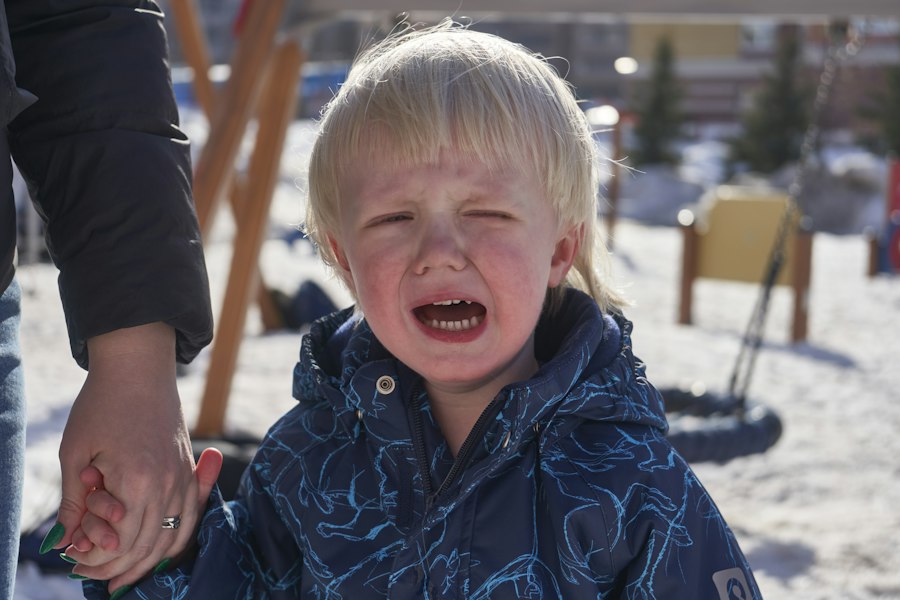
Your toddler is on the floor of the cereal aisle. People are staring, or worse, not staring — the pointed kind of not-looking that somehow feels louder than a stare. If you're trying to figure out how to handle toddler tantrums in public without losing it, the short answer is: stop trying to stop the tantrum, and start managing the one thing you actually control — your own response.
Public meltdowns feel different from the ones at home, and not just because of the audience. The same overstimulating environment that's hard on your toddler's nervous system — bright lights, noise, a rigid schedule, too many "no's" in a row — is also hard on yours, which is exactly why patience runs out faster in a store than it does on your own living room floor.
This article covers why public tantrums spike the way they do, a calm and judgment-proof plan for the moment it's happening, and how to reduce how often they happen in the first place. It builds on the foundational strategies in our complete guide to staying calm as a parent, applied specifically to the pressure-cooker of a public meltdown.
💡 The core insight: A public tantrum is not a bigger emergency than a private one — it only feels that way because of the audience. Your child needs the exact same calm response either way; the "public" part is a problem for your nerves, not for your parenting.
Why Tantrums Spike in Public (It's Not Bad Behavior)
Toddlers between roughly one and four years old have an underdeveloped prefrontal cortex — the brain region responsible for impulse control, flexibility, and calming themselves down. Public spaces overload exactly that system.
Sensory and Cognitive Overload
A grocery store or mall is a wall of stimulation: fluorescent lights, unfamiliar sounds, strangers' faces, dozens of tempting things they can't touch. For an adult, this is background noise you filter out automatically. For a toddler's still-developing brain, it's a firehose with no filter — and that alone drains the same self-regulation reserve they need to handle "no" gracefully.
Broken Routine, Broken Regulation
Errands almost always collide with nap windows, snack times, or the general rhythm a toddler's nervous system relies on to stay regulated. A tantrum at 4pm in the checkout line is rarely really about the candy — it's about a depleted, overstimulated toddler hitting their limit in the least convenient possible place.
Why It Feels Worse to You
Public meltdowns trigger something in parents that private ones don't: social threat. Humans are wired to care about group judgment, and a screaming toddler in public activates that wiring hard, which is why you might feel your own heart rate spike before you've even decided how to respond. Naming this helps — the surge of heat you feel is not proof you're doing something wrong, it's a normal stress response to a genuinely stressful moment.
The In-the-Moment Plan: What to Actually Do
Forget trying to reason your way out of a meltdown or make it stop faster for the sake of onlookers. The goal in the moment is regulation, not speed.
1. Get Low and Get Close
Crouch to your toddler's eye level and move physically close, even if that means kneeling on a store floor. This does two things: it signals safety to your child's nervous system, and it quietly shrinks the "performance" for anyone watching, because you're no longer standing over a screaming child looking helpless — you're calmly attending to them.
2. Narrate the Feeling, Not the Behavior
Say what you see, briefly and without judgment: "You really wanted that. You're so mad we're not getting it." This isn't giving in — it's showing your child that big feelings are understandable, which is often what actually starts to de-escalate the moment, rather than a firm "stop it" that adds fuel.
3. Hold the Boundary Without Debating It
State the limit once, calmly, and then stop negotiating: "We're not getting the candy today. I know that's hard." Repeating or arguing the point over and over gives a dysregulated toddler more to react to. One calm sentence, then your energy goes into staying steady, not into winning the argument.
4. Have a Physical Exit Plan
Decide in advance, before you're in the moment, what your exit move is: carrying your child to the car, moving to a quieter corner, or abandoning the cart if needed. Having already decided removes the on-the-spot decision fatigue that makes public meltdowns feel so much harder to manage than private ones.
💡 The Mindful Family Handbook includes ready-to-use scripts and calm-down tools for exactly these moments — so you always know what to say next, in public or at home. Available now at calmimo.com.
5. Ignore the Audience on Purpose
You will likely never see most of these strangers again, and the vast majority of parents watching are quietly relieved it isn't their turn today. Deliberately redirect your attention fully to your child instead of scanning the room for reactions — this single shift does more to calm your own nervous system than almost anything else, because it removes the social-threat trigger driving your own stress.
6. Skip the Apology Tour
You don't owe strangers an explanation or an apology for your toddler being a toddler. A brief, neutral "we're okay, thanks" is plenty if someone comments. Save your energy for your child, not for managing other people's opinions of your parenting.
What NOT to Do During a Public Meltdown
- Don't give in purely to stop the noise. Caving specifically because you're in public teaches your toddler that public places are where limits bend — which tends to increase, not decrease, future public tantrums.
- Don't threaten consequences you won't follow through on. "We're leaving right now and never coming back" said in frustration and then not enforced teaches your toddler that your words don't need to be taken seriously.
- Don't shame or compare. "Everyone is looking at you" or "Big kids don't act like this" adds humiliation on top of dysregulation, which makes it harder, not easier, for your child to calm down.
- Don't rush the calm-down for the audience's sake. Trying to speed things up because you feel watched usually escalates the moment further. A slower, calmer response actually resolves faster than a rushed, anxious one.
Reducing Public Tantrums Before They Start
The most effective tantrum management happens before you ever walk in the door.
- Time errands around your toddler's rhythm. Avoid nap windows and the pre-meal hour whenever you can — a fed, rested toddler has dramatically more regulation capacity than a hungry, tired one.
- Preview the trip. A short, concrete heads-up before you go in — "We're buying milk and bread, then we're leaving, no toys today" — gives your toddler's brain a map, which reduces the shock of hearing "no" once you're inside.
- Give small, real choices. "Do you want to push the cart or hold the list?" hands over a bit of control in a low-stakes way, which reduces the need for your toddler to grab control through a meltdown instead.
- Pack a sensory reset. A snack, a small toy, or noise-reducing habits (like a quiet game) can buy your toddler's nervous system enough bandwidth to get through the trip without tipping over.
- Keep trips short on hard days. If your toddler is already off-rhythm — a rough morning, a skipped nap — shrink the errand instead of pushing through the full list. Protecting their capacity in advance beats managing a meltdown later.
If tantrums are frequent even outside of public settings, our guide on how to discipline a 3 year old without hitting or yelling covers the broader discipline approach these same principles come from. And if hitting is part of the picture during meltdowns, what to do when your child hits you walks through the in-the-moment response step by step.
Want a Script for Every Hard Moment?
The Mindful Family Handbook gives you day-by-day scripts, calm-down tools, and age-by-age strategies for tantrums, hitting, and the hardest parenting moments — so you always know what to say next, wherever you are.
Get the Guide — calmimo.comWhen to Just Leave
Sometimes the kindest, most effective move is simply to go. If your toddler is fully dysregulated and the environment isn't helping, there's no prize for finishing the shopping list. Calmly gather your things, carry your child if needed, and finish the errand another time — or send someone else, order online, or skip it. Protecting your own capacity is part of managing the meltdown, not giving up on it. For more on what's happening neurologically during these moments, our summary of The Whole-Brain Child breaks down the science in practical, parent-friendly terms.
Frequently Asked Questions
How do I handle a toddler tantrum in public without losing it?
Get physically low and close to your child, name the feeling briefly ("you're really mad"), hold your boundary in one calm sentence without repeating it, and deliberately ignore the audience. Have an exit plan decided in advance so you're not making decisions mid-meltdown. The goal is regulation, not speed.
Why does my toddler only tantrum in stores and not at home?
Public spaces combine sensory overload (lights, noise, crowds), broken routine (errands often collide with nap or snack times), and constant temptation with constant "no." That combination drains a toddler's limited self-regulation capacity faster than the calmer, more predictable environment of home.
Should I give in during a public tantrum just to stop the scene?
Giving in specifically because you're in public tends to teach a toddler that public places are where limits bend, which can increase future public tantrums. It's usually more effective — and often faster in the long run — to hold the boundary calmly and, if needed, simply leave.
Is it normal for toddlers to have frequent tantrums when out shopping?
Very normal, especially between ages one and four. Errands stack multiple regulation challenges at once — overstimulation, broken routine, and lots of tempting things they can't have. Frequent public tantrums are a developmental stage, not a sign of a behavior problem.
What should I do if strangers stare or comment during a meltdown?
You don't owe an explanation or apology. A brief, neutral response is enough if someone comments, and it's usually best to redirect your full attention back to your child rather than the audience — that shift also tends to calm your own stress response, which helps the whole interaction go faster.